Boost your ecommerce SEO with a controlled catalog.
A custom ecommerce SEO strategy starts with the patterns repeated across the whole site. It prioritizes revenue pages, technical rules and content by demand rather than treating every URL equally.
Google + shopping + AI search for online stores
Search services for online stores that need category and product visibility to become organic revenue, not a larger ranking report.
DIRECT ANSWER
Ecommerce SEO services improve how an online store is crawled, indexed, ranked and chosen across organic search. The work combines keyword research, technical SEO, category and product optimization, duplicate-content control, internal links, structured data, link building, user experience and measurement tied to revenue or qualified leads.
E-commerce search engine optimization is different from traditional SEO because a store can create thousands of URLs through products, variants, filters, pagination, internal search and changing inventory. The program has to decide which pages deserve visibility, which should consolidate, and how customers move from a search engine results page to a category, product and purchase.
This is a commercial ecommerce SEO service, not a list of generic SEO tips. The sections below show the platforms that fit, the work included, the catalog problems addressed, the first 90 days and the evidence available.
COMMERCIAL FIT
Ecommerce stores need SEO when valuable categories are hard to find, duplicated or disconnected from purchase intent. The right model depends on the business, platform and implementation team.
A custom ecommerce SEO strategy starts with the patterns repeated across the whole site. It prioritizes revenue pages, technical rules and content by demand rather than treating every URL equally.
Ecommerce brands should connect organic search to inventory, margin, paid-query evidence and conversion data. Optimizing ecommerce discovery works better when channel teams agree on the target customer and commercial definitions.
The approach to ecommerce SEO provides ecommerce teams with crawlable product facts for Google and AI. A larger ecommerce business may need an ecommerce SEO agency that focuses on governance; a smaller team may need direct specialist guidance.
01 / FIT
Choose the closest ecommerce platform or sales model. The technical rules, target audience, page types and commercial measurement change with it.
Commercial outcome
Collection architecture, canonical behavior, theme rendering, app bloat, Product schema and internal links are handled at template level.
Priority system
Commercial outcome
The program separates useful category and attribute pages from crawl waste, then improves templates without breaking merchandising or checkout.
Priority system
Commercial outcome
For BigCommerce, Adobe Commerce and custom ecommerce platforms with many SKUs, markets or teams. Architecture, feeds, facets and releases need documented ownership.
Priority system
Commercial outcome
B2B buyers search specifications, compatibility, procurement and implementation questions. The content and conversion model should not copy a consumer store.
Priority system
Running on Shopify? See the dedicated Shopify SEO service for platform-specific collection, theme, app and schema work.
02 / SCOPE
Each workstream ends in a page, template, implementation ticket, decision rule or measurable change. An ecommerce SEO audit is the starting point, not the final product.
Category architecture, indexation, duplicate content, product templates, faceted navigation and revenue pages checked before content work starts.
Commercial, informational and B2B ecommerce queries mapped to category pages, product pages, guides and comparison content.
Titles, H1s, copy blocks, internal links, schema and SERP snippets built around how people actually shop and compare.
Canonicals, crawl traps, pagination, filters, URL parameters, structured data and Core Web Vitals prioritized by business impact.
Link building, first-hand content, entity signals and answer-ready sections that help Google, Bing, ChatGPT and AI Overviews trust the store.
GSC, GA4, ecommerce events, assisted conversions, qualified leads and category-level revenue reported against the pages that changed.
THE CATALOG SYSTEM
04 / FAILURE MODES
Most ecommerce SEO companies can produce a keyword list. The harder work is controlling the patterns that repeat across thousands of URLs.
Filters and sorting paths create crawl traps and compete with revenue categories.
Product grids omit the buying information required to compare and choose.
Manufacturer descriptions create duplicate pages across many retailers.
Deleted products, soft 404s and bad redirects waste backlinks and history.
Product, Review and Breadcrumb markup stops matching visible content.
SEO efforts follow URL count instead of demand, margin and inventory depth.
05 / AI SEARCH
AI Overviews, ChatGPT and other large language model systems can summarize product research, but they still need crawlable source material and consistent brand facts.
Specific compatibility, materials, use cases, policies, comparisons and expert notes are more useful than vague marketing claims.
Brand, product, category, organization, pricing and availability information should agree across the website, feeds and relevant external sources.
AI citations, referrals and recommendations are monitored alongside Google organic search. No provider can guarantee a mention.
06 / PROOF
Pro Micro started as a single landing page. I rebuilt it into a WordPress ecommerce store with product and city-level catalogue architecture, then measured the result in the search-engine segment rather than mixing it with paid campaigns.
Specialist electronics ecommerce
Monthly search visits moved from near zero in March 2018 to approximately 2,100 in June 2019. The selected Yandex Metrica report records 6,688 search visits across the period.
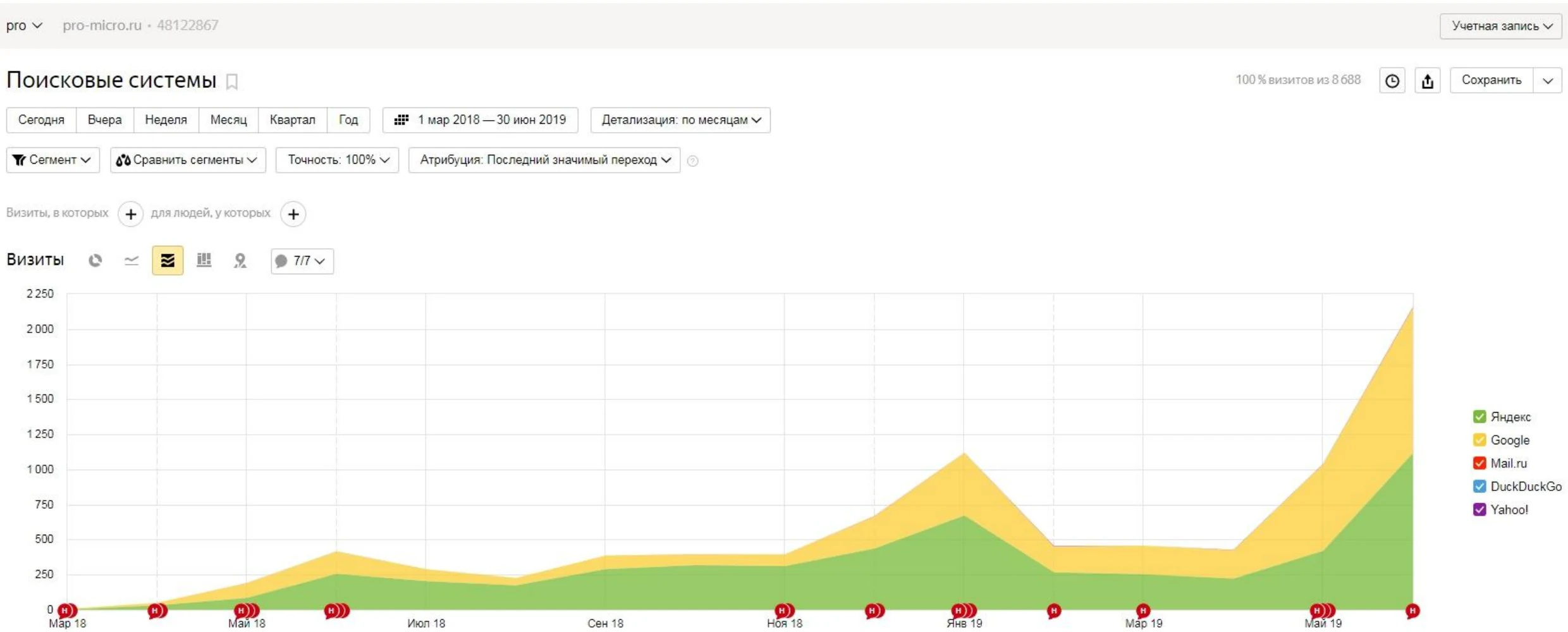
The chart verifies search visits, not ecommerce revenue or assisted conversions. Paid campaigns were part of the wider project, but they are not included in this search-engine segment.
07 / CHOICE
| Decision | Generic SEO package | Specialist search partner |
|---|---|---|
| Priorities | Traffic and keyword volume | Demand, margin, inventory and ranking feasibility |
| Technical work | One crawl and score | Facets, variants, templates, canonicals, feeds and index rules |
| Content | Blog publishing | Category, product, comparison and B2B buying content |
| Reporting | Rankings and sessions | Revenue, assisted conversions, qualified leads and index quality |
| Delivery | Recommendations handed over | Implementation tickets, QA and direct specialist access |
08 / PROVIDER FIT
The best ecommerce SEO services match the store's technical reality, implementation capacity and commercial target. Agency size and an award-winning SEO badge do not answer those questions.
A senior SEO consultant fits a founder, ecommerce lead or in-house team that wants direct strategy and can execute internally. You get a named specialist, a custom roadmap and fast decisions without an account-management layer. The client must still provide development, merchandising and content access.
A team of SEO specialists with ecommerce experience can fit a larger business that needs content production, outreach and project management. Ask whether senior ecommerce SEO experts remain involved after the sale, which work is outsourced, and how recommendations move from a report into the website.
An agency that specializes in SEO for catalogs should show experience in ecommerce architecture, not only traditional SEO. Look for platform-specific technical work, honest evidence and reporting tied to sales. Many ecommerce companies hear traffic promises while development ownership remains undefined.
Each ecommerce store needs a clear ownership model. The final recommendation should state whether an ecommerce SEO partner, direct consultant or in-house team owns the work.
09 / PRICING
There is no responsible universal store-search package. Pricing changes with catalog size, web design and platform constraints, markets, development support and the amount of content or authority work required.
Best for a team that can execute but needs a data-driven SEO plan. The engagement covers demand, competitors, index quality, technical SEO, architecture, templates, content gaps, analytics and a prioritized implementation backlog.
Defined project · fixed deliverablesBest when developers, merchandisers and writers are already in place. I guide ecommerce clients through releases, validate work, refine priorities and connect SEO efforts to organic revenue or qualified lead generation.
Monthly access · client-side executionBest for stores that need ongoing research, briefs, implementation management, link building and reporting. The managed SEO scope is customized around the range of ecommerce pages and markets instead of a fixed article or backlink quota.
Monthly program · scoped after reviewThe cost is set after a store review because the work is driven by recurring URL patterns, not only page count. A smaller Shopify store with one market and an available developer has different SEO needs from enterprise ecommerce across several countries. The proposal states deliverables, ownership and measurement. It does not hide production behind a vague range of SEO activities.
10 / INTEGRATION
Search optimization is not a replacement for every marketing channel. Strong marketing strategies use the same product economics and customer evidence while protecting the role of organic search.
Paid search and organic SEO answer different time horizons. PPC can validate category demand quickly; organic SEO compounds through indexable pages, internal links, authority and improved click-through rate. Paid-query and conversion data can sharpen keyword strategy without turning search work into a copy of the advertising account.
Conversion rate optimization and web design affect whether ranking pages produce sales. Template changes should improve user experience, mobile performance and purchase clarity without removing crawlable content. Email, PR and other digital marketing services can also activate useful research or buying guides and earn backlinks.
I do not position this as a full-service design and digital marketing agency. These SEO services for ecommerce websites provide search strategy, implementation direction and measurement, then work with the specialists responsible for development, design, paid media and lifecycle marketing.
11 / FIRST 90 DAYS
The ecommerce SEO roadmap uses recognized SEO best practices without guaranteed sales or overnight rankings. Each month has a catalog objective and visible deliverables.
Demand map, competitor baseline, technical audit, category and product architecture, crawl/index rules, analytics and AI-crawler checks.
Priority category and product templates, internal links, commercial copy, schema, comparison content and authority production.
Index quality, query movement, organic revenue, assisted conversions, AI referrals and missed demand set the next implementation cycle.
12 / FAQS ABOUT ECOMMERCE SEO
Scope, platform, pricing and timing should be clear before a store commits to an SEO plan.
START HERE
Send the store, platform and target market. I will identify the first revenue cluster, the largest catalog leak and whether an audit, consulting or managed engagement fits.
Cookies, briefly. Essential ones run the site; analytics cookies (Google) only switch on if you say yes. Details in the Privacy Policy.