What are AI SEO services?
AI SEO services improve a brand across classic search results and AI-generated answers as one program. The work combines technical SEO, keyword and prompt research, content architecture, answer engine optimization, generative engine optimization, structured data, entity clarity, authority building and unified reporting. The objective is not simply more mentions in ChatGPT. It is qualified visibility throughout the research journey, with every change tied to a page, source, implementation owner and measurable business outcome.
What does an AI SEO agency do?
An AI SEO agency first records where a brand appears across Google and major AI platforms, then diagnoses why competitors rank, get cited or receive recommendations. It fixes technical access, rebuilds priority pages, aligns entities and schema, develops useful source material, strengthens third-party authority and retests a controlled prompt set. A credible agency reports classic organic performance beside AI visibility instead of replacing rankings and conversions with screenshots from one assistant.
How is AI SEO different from traditional SEO?
Traditional SEO primarily improves discoverability and clicks from search engine results, while AI SEO also improves whether a system can retrieve, understand, verify and use the brand inside a generated response. The foundation overlaps heavily: crawlability, indexation, useful content, links and authority still matter. AI SEO adds prompt-level research, answer-ready passages, entity consistency, source analysis and measurement across AI platforms. It extends traditional SEO rather than making the existing discipline obsolete.
What is the difference between AI SEO, GEO and AEO?
AI SEO is the umbrella program covering visibility across Google search and AI-driven discovery. GEO focuses on how a brand is represented, corroborated and cited by generative systems. AEO focuses more narrowly on direct-answer retrieval, question formats, snippets and self-contained passages. They share one technical, content, entity and authority base, so I plan them together when a client needs full coverage and separate them only when the existing search foundation is already strong.
Can AI SEO help a brand appear in ChatGPT and Google AI Overviews?
AI SEO can improve the conditions that make a brand discoverable and citable in ChatGPT, Google AI Overviews and other systems, but no agency can guarantee a specific response or permanent placement. The process strengthens accessible source pages, factual clarity, entity signals and independent corroboration. Progress is measured across a repeatable prompt set because outputs can vary by model, query phrasing, location, session and date.
Does AI SEO require new content?
Not always. Many websites first need stronger structure, evidence and internal relationships on pages they already own. Existing service pages, product documentation, comparisons, case studies and articles can be rebuilt into clearer decision paths and answer-ready sections. New content is justified when a valuable commercial question has no complete destination, when a missing category or comparison blocks demand, or when first-party research can become a source customers and AI systems repeatedly reference.
How long does AI SEO take?
Technical and on-page improvements can be shipped during the first month, while measurable search and AI visibility normally require several months. Retrieval-driven platforms may reflect a recrawled source sooner, but authority, corroboration and durable category association compound more slowly. Timing depends on the website, implementation speed, competition and the sources each platform trusts. I establish the baseline first and report early movement without presenting one favorable answer as a lasting result.
How much do AI SEO services cost?
AI visibility audits cost $100 for one snapshot: up to 10 prompts on 2 available platforms. SEO Audit & Strategy is $1,500 per project, with a crawl of up to 500 URLs and manual review of up to 20 priority pages. Consulting is $300 per hour. Managed SEO, GEO and AIO starts at $5,000 per month for one website, language and market. The starting monthly scope includes up to 10 priority pages, 4 new or substantially rewritten pages within that limit, 5 defined technical tickets and a panel of up to 25 prompts. Larger scopes and external costs are quoted separately; rankings and citations are not guaranteed.
How do you measure AI SEO success?
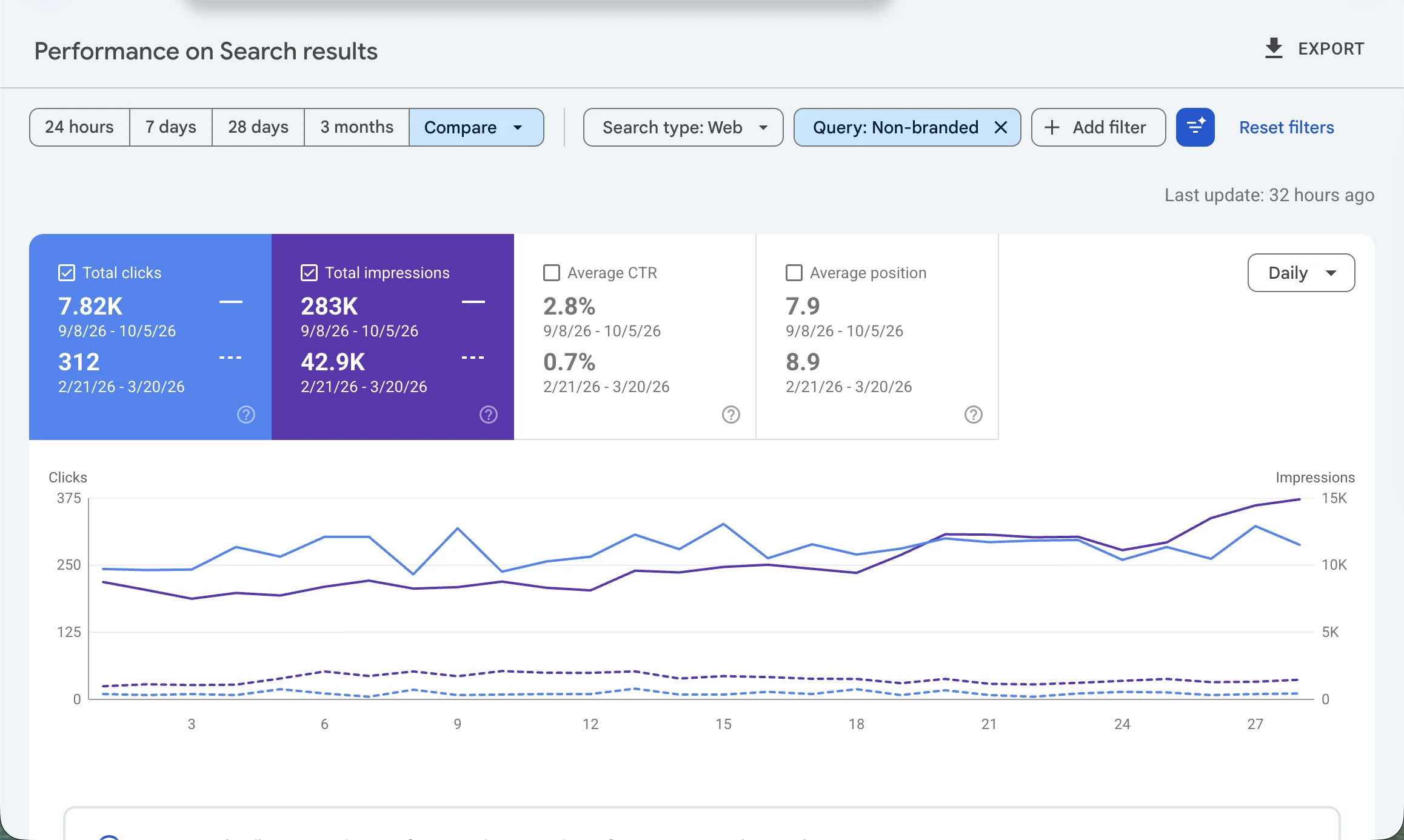
I measure classic and AI outcomes together: rankings, clicks, conversions, named mentions, citation share, source URLs, answer accuracy, sentiment, competitor presence, AI referral sessions and self-reported attribution. The keyword and prompt sets remain documented so comparisons are useful over time. A shipping log connects movement to implemented pages and authority work. Visibility is then evaluated against commercial actions instead of treated as a standalone score.
Do AI SEO services include technical optimization?
Yes. Technical optimization is core work because search engines and crawlers cannot reliably use pages they cannot access, render or index. The audit covers crawling, canonicals, server-rendered content, internal links, structured data, site performance and critical resources blocked by robots or security layers. Technical changes do not guarantee an AI citation, but they remove retrieval problems that can prevent otherwise useful content from ranking or appearing in AI answers.
Can AI SEO help ecommerce and local businesses?
Yes, when the strategy matches the buying journey. Ecommerce work connects category and product pages, merchant facts, reviews, comparisons and structured data. Local SEO adds location pages, business profiles, service-area entities and consistent local evidence. In both cases, the goal is to make offers easier to discover, compare and verify across organic results and AI assistants while measuring the visits, leads or transactions that follow.
What role do structured data and entities play?
Structured data helps machines interpret explicit facts and relationships, while consistent entities reduce ambiguity across the wider web. Relevant Organization, Person, Service, Product, Article and breadcrumb markup should match the visible page and credible external profiles. Neither schema nor an entity list manufactures authority. They support a program built on accessible content, named expertise, verifiable evidence and third-party agreement.
Can you work with our existing SEO, PR or content team?
Yes. AI SEO often works best as a specialist layer inside an existing marketing operation. I can own the audit, keyword and prompt model, page architecture, technical tickets, content patterns, implementation review and measurement while internal teams handle publishing, engineering or public relations. Responsibilities and approval gates are agreed before work starts so the program does not generate duplicate briefs, conflicting schema or separate dashboards that nobody trusts.
How should I choose an AI SEO company?
Choose an AI SEO company that can show a documented baseline, explain how traditional SEO, GEO and AEO fit together, identify the exact platforms and prompts being tracked, and connect visibility to leads or revenue. Ask who edits the website, how claims are verified, which authority tactics are allowed and what the provider refuses to guarantee. Avoid vendors that sell citations, publish mass FAQ pages or rename a standard content retainer without changing the research and measurement model.