Competitive pages stall
Priority pages are indexed and useful, but competitors have stronger relevant authority and keep the top search rankings.
RELEVANCE + EDITORIAL VALUE + MEASURABLE AUTHORITY
Managed authority campaigns for brands that need relevant sources, transparent outreach and links a real editor can defend, not a spreadsheet of purchased domain metrics.
DIRECT ANSWER
A link building service earns relevant backlinks and brand mentions that improve a website’s authority, discoverability and ability to compete in organic search. The work starts with a link-profile audit and strategy, then uses linkable assets, digital PR, manual outreach, expert contributions, resource pages and reclamation to create legitimate editorial reasons for other websites to reference the brand.
A quality link is not defined by Domain Authority or Domain Rating alone. The referring page should have a real audience, relevant context, clear editorial standards and a useful relationship with the destination page. Reporting should show where every link lives, why it was pursued, which page it supports and whether the targeted visibility, organic traffic or referral behavior changes.
01 / WHEN TO INVEST
Link acquisition amplifies a useful, indexable destination after the page is ready. It cannot repair a weak offer, broken site foundation or content that gives editors no reason to cite it.
Priority pages are indexed and useful, but competitors have stronger relevant authority and keep the top search rankings.
Reports show domain metrics and link counts, but not the real page, audience, referral potential, destination logic or business outcome.
Journalists, editors and industry resources do not yet treat the company as a source, even though the team has useful expertise or data.
SaaS, ecommerce, local SEO or international expansion needs links and mentions in the market where customers actually search.
02 / MANAGED LINK BUILDING
The fully managed service keeps diagnosis, assets, prospecting, editor contact, placement QA and reporting inside one system. It does not outsource risk to a hidden reseller network.
Existing referring domains, anchors, target pages, lost links, suspicious patterns and competitor gaps become a documented baseline.
Commercial priorities are mapped to realistic destinations, link types, markets, anchor ranges, assets and a defensible campaign pace.
Original data, comparison resources, tools, expert commentary and useful guides create a reason for another editor to reference the site.
Real stories, research and expert angles are pitched where they fit the publication and its readers, not distributed as generic press releases.
Prospects are researched individually. Each pitch explains the editorial value instead of sending automated guest-post templates at scale.
Broken links, lost links and unlinked brand mentions are recovered when the context and destination still make sense.
Every live link is checked for URL, anchor, surrounding context, indexability, qualification and unexpected changes after publication.
The report shows the live page, target, anchor, link type, relevance, traffic evidence, status and impact on the pages being supported.
03 / QUALITY GATE
The scorecard is a decision aid, not a guarantee. A prospect can have high traffic and still fail because the page is irrelevant, the publication sells links openly or the proposed destination adds nothing for readers.
I compare the publication topic, individual page, search queries, market and surrounding text with the client page. A general news domain does not automatically beat a smaller specialist source.
Traffic is checked at page and domain level where data is available. A quality link should live on a page people can discover, not an orphan article created only to host placements.
Independent review, original content, named authors and normal publishing patterns matter. Catalog availability and guaranteed anchors are risk signals, even when the metrics look strong.
The surrounding copy, anchor text and target page should make sense without an SEO explanation. Google recommends concise, relevant anchor text and useful context around each link.
I sample outgoing destinations, topic drift, publishing velocity, sponsored patterns and repeated clients. A domain that links indiscriminately creates a footprint rather than authority.
Sponsorship and advertising can be legitimate marketing, but links exchanged for value should use an appropriate qualification. Ranking credit is not sold as the product.
04 / BUYER CHECKLIST
The best link building services make quality, ownership and risk visible before the first pitch. Use the checks below to compare link building agencies, independent SEO experts and managed outreach services without reducing the decision to a price-per-link table.
A credible provider starts with an SEO strategy, priority pages and the competitive gap. The answer should explain how the team will build links to your site, which destinations need authority and why those pages are ready. Custom link building means the tactic follows the opportunity; it is not a standard inventory with your URL inserted.
Request an example prospect with page-level organic traffic, topical fit, country, editorial context and outgoing-link patterns. Domain Authority is a screening metric, not proof of SEO value. The right link building partner should let you reject irrelevant sites and explain why one link can be more useful than a larger batch.
Manual outreach begins with a specific editorial reason to cite a source. A link building marketplace begins with websites available for purchase. Guest post and niche edit opportunities are not automatically bad, but fixed catalogs, exact-match anchor guarantees and instant volume are signs that backlink building has become inventory trading.
Client reviews can establish service quality, but they do not replace evidence. Look for case studies showing the starting point, work completed, time period and search results. Reporting should include live URLs, link placements, target pages, anchor text, qualification, publication date and the search engine rankings or referral behavior being monitored.
Choose a provider that can coordinate technical SEO, content marketing and off-page SEO. Links amplify a page; they do not make a weak page useful.
Clarify whether the work is white-label link delivery, strategy support or direct client collaboration. Ownership and communication rules belong in the scope.
Connect digital PR, content assets and outreach to one campaign. Content marketing agencies should not measure success only by the number of published articles.
MARKET LABELS
The link building industry uses overlapping labels. SEO link building services may cover only prospecting, while fully managed link building should include the audit, strategy, assets, research, pitching, publication QA and monitoring. Managed SEO is broader again because it can include technical, on-page and content work.
Being called one of the best link building companies is not evidence by itself. A leading link building team or trusted link building partner should prove its process, show limitations and connect each strategic link to a real destination and business objective.
05 / LINK TYPES
The right strategy combines several tactics. It does not rename every purchased placement as outreach.
Original research, expert commentary, launches with real evidence and stories relevant to journalists.
The coverage must stand as editorial content even if the backlink were removed.Sharing first-hand expertise with a publication whose audience overlaps the brand’s market.
The article needs an independent editorial standard, not an optimized guest post farm.Adding a useful tool, guide, dataset or reference to a page that already serves the target audience.
The destination must improve the existing resource and match its search intent.Recovering lost backlinks, fixing broken destinations and converting accurate unlinked mentions.
The original editorial relationship and context must still be valid.Replacing a genuinely dead reference with a current resource that satisfies the same reader need.
The replacement cannot be a weaker commercial page forced into unrelated context.Associations, integrations, suppliers, customers, events and legitimate business relationships.
The link should document a real relationship, not an excessive exchange scheme.06 / PROCESS
Each stage has an output the client can inspect. That keeps the work accountable even when editors control the publication date.
I review the current link profile, priority pages, ranking competitors and previous vendor patterns. The first deliverable is a gap and risk map, not a list of sites for sale.
Each campaign connects a page worth ranking with a page worth citing. If the website has no useful asset, I define or build that asset before asking editors for a link.
Prospects are scored for topical relevance, real organic traffic, page context, editorial standards, market fit and risk. Approval can happen before contact when the client needs control.
Direct editor pitching, PR, expert contributions, resource-page pitches and reclamation are used according to the opportunity. The message is specific to the editor and audience.
Live placements are checked, monitored and tied to target-page impressions, search visibility, referral traffic and AI citations where measurement is possible.
07 / SEGMENT PLAYBOOKS
Some link building agencies reuse the same guest-post inventory for every niche. The asset, target page, publication and outcome should change with the business model.
SaaS programs use integrations, benchmark data, use cases, founder expertise and comparison resources. Links should support product, solution and category pages without forcing commercial anchors into unrelated blogs.
Ecommerce campaigns can use buying data, trends, original surveys, product expertise, partnerships and seasonal resources. The campaign maps authority to category pages that can convert organic demand.
Local SEO campaigns prioritize relevant industry, partner, community and local-media sources. Multi-location brands need central authority plus market evidence, not the same directory list copied for every branch.
International work follows the domain, language and hreflang architecture. A strong link profile on the wrong ccTLD does not automatically solve visibility in another market.
08 / RISK CONTROL
Google defines link spam as creating links primarily to manipulate ranking. Its examples include buying links for ranking credit, excessive exchanges, automated link creation, optimized links in paid guest posts, low-quality directories and distributed footer links.
White hat link building is not a protected label. Providers that focus on building links from hidden networks, guaranteed anchors or fixed catalogs can still create risk. That sort of link building is excluded here. Commercial advertising can be valid, but it should be qualified and measured as advertising.
Read Google Search link-spam policies →08 / REPORTING
The report is not a victory list. It records the source, target, context and status, then connects link building efforts to the pages and SEO goals they are intended to support.
09 / EVIDENCE
These case studies included technical, content and authority work. The evidence proves the final organic scale and direction; it does not isolate backlinks as the only cause.
Car rental portfolio
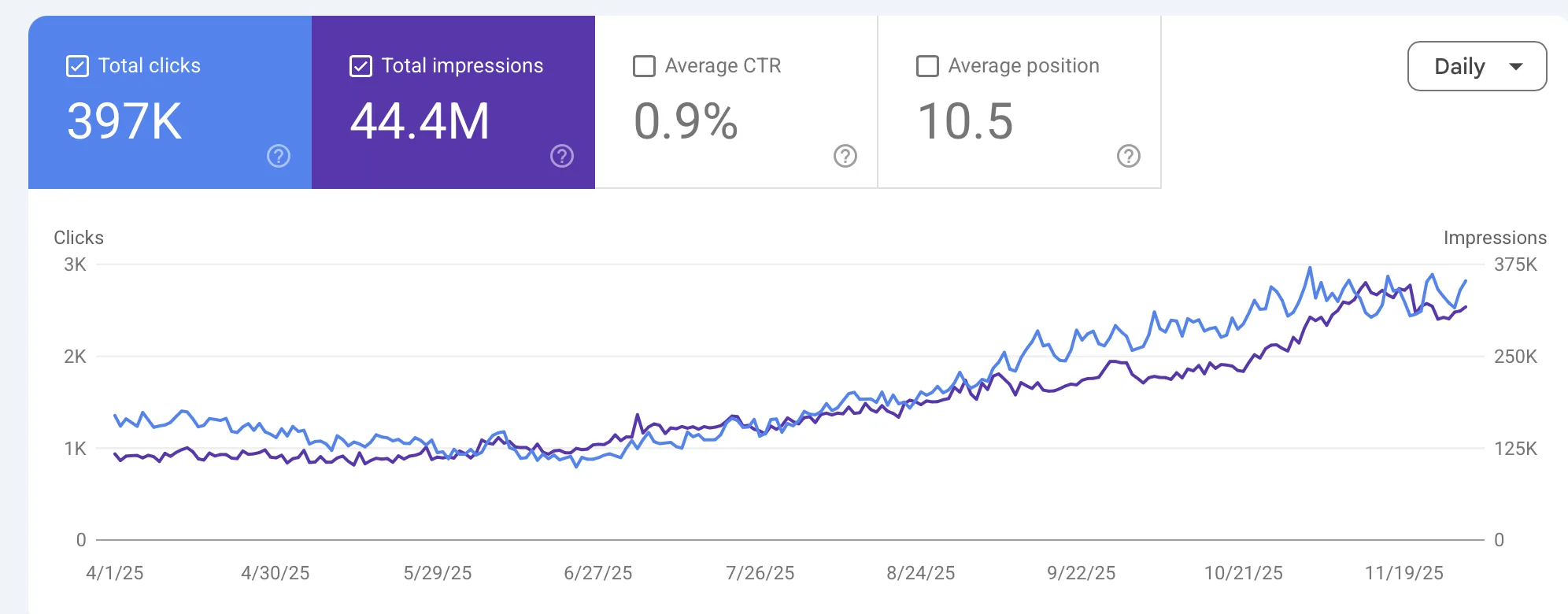
Technical and on-page foundations, commercial architecture and authority development supported growth from 26,694 to 74,177 clicks between equal 28-day GSC windows. Impressions increased 147%.
Restaurant discovery platform
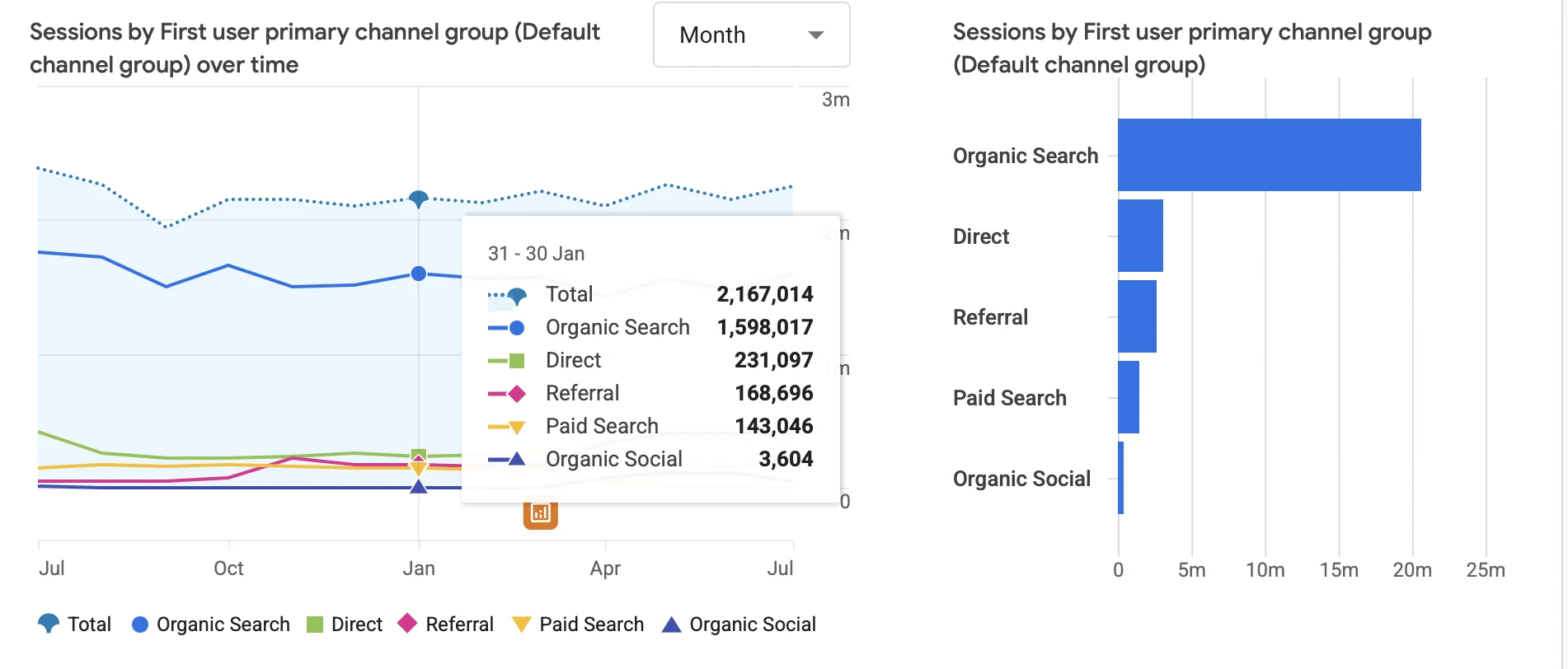
Restoclub grew through a large semantic architecture, technical execution, scalable content and authority. GA4 recorded about 1.598M monthly Organic Search sessions, while 87% of a 50,000-keyword core reached the Top 10.
10 / SCOPE + TIMING
Packages based only on volume reward the wrong behavior. I quote after the audit defines the markets, target pages, competitive gap, asset needs, approval model and campaign ownership.
Link audit, competitor gap, risk review, destination map, asset decisions and prospect-quality criteria. Existing vendors can be evaluated before replacing them.
Assets, prospect research, editor contact, pitching and live-link QA begin. Editorial timelines vary, so reporting separates work completed from coverage published.
Organic performance, referral activity, lost links and generative visibility guide the next campaign. The plan changes when evidence says another page or tactic deserves priority.
Audit and strategy only, managed execution, or consultant support for an in-house team. Deliverables, expected cadence and QA responsibility are defined before pricing.
FAQ
Direct answers about safety, cost, timing, approvals, link types, guarantees and generative discovery.
Link building services help a website earn relevant backlinks and brand mentions from other websites. The work can include link-profile auditing, strategy, linkable assets, digital PR, editor pitching, expert contributions, resource opportunities, broken-link reclamation and reporting. A responsible service starts with the pages and business outcomes that need authority, then chooses suitable opportunities instead of selling a generic link count.
Link building still matters because links remain a ranking factor and a discovery path for Google and other search engines. Link building works when references are editorially relevant, placed in useful context and connected to pages that deserve visibility. Manipulative patterns can be ignored or treated as spam. Modern campaigns also pursue credible brand mentions and source citations because authority matters in AI-assisted discovery as well as classic organic results.
Cost depends on the market, competition, asset quality, required research, outreach effort, publication standards and campaign ownership. I do not quote a fixed price per link because that model encourages teams to optimize for quantity and domain metrics. After the link audit, I define the monthly scope, target link types, required assets, realistic cadence and reporting responsibility before the engagement starts.
A campaign normally needs several months to create assets, build editor relationships, earn coverage and observe search movement. Reclamation can produce links faster, while original research and PR take longer. The timing also depends on the website’s technical health, content quality, existing authority and implementation speed. A live link is an output; ranking and traffic changes are lagging outcomes.
Yes. Prospect approval can be included before contact, before final publication or only for higher-risk opportunities. The review shows the domain, relevant section, organic traffic evidence, likely page context, audience market and any commercial terms. Approval protects the brand, but it should not turn the campaign into buying links from a fixed catalog.
I can define activity, deliverables and a realistic publication range, but I do not guarantee a search position or force an editor to publish. Rankings depend on site quality, content, competition, brand demand and the wider link profile. A guaranteed large link count usually means the provider controls a network or accepts weak sources, which is the opposite of independent editorial trust.
I do not buy links that pass ranking credit as a way to manipulate Google Search. Sponsorships and advertising can be legitimate marketing, but commercial links should be qualified with rel=sponsored or rel=nofollow. The SEO service focuses on editorial reasons to cite the brand: useful data, expertise, resources, products, partnerships and stories that fit the publication.
A guest post is a new contribution created for another publication. A niche edit, also called a link insertion, adds a link to an existing article. Either can be legitimate when the editor independently improves the page for readers, but both become risky when sold from a catalog primarily to pass ranking credit. I judge the publication, page, context and relationship rather than the tactic label.
The best link is an editorial, in-context reference from a page that is relevant to the destination, has a real audience and gives readers a useful next step. Domain Rating alone cannot establish quality. The referring page, publication standards, traffic, topical fit, anchor, destination and reason for the reference all matter. One strong source can be more useful than hundreds of unrelated directory entries.
Yes. I can run the audit and strategy, create the prospect-quality model, review an existing vendor, train an in-house team or manage selected campaign work. The engagement does not require replacing the SEO, content or PR team. Clear ownership is agreed for assets, pitching, approvals, publication QA and reporting so work is not duplicated.
Yes, but the playbooks differ. SaaS often earns links through product data, integrations and expert commentary. Ecommerce campaigns use category research, buying resources, PR and partnerships. International campaigns must point authority to the correct market, language and domain structure. Local SEO may rely more on industry, partner and community relevance than national publication volume.
Links and credible mentions can help establish which sources and entities are trusted across the web, but no provider can guarantee a citation in ChatGPT, Perplexity or AI Overviews. I track generative visibility alongside organic rankings where it matters, and I prioritize source pages that have real topical relevance instead of manufacturing links solely for an AI metric.
Treat these lists as a shortlist, not a verdict. Top link building services should show how prospects are reviewed, who owns pitching, what appears in the report and which risks are rejected. The best link building companies for one SaaS brand may be wrong for a local or ecommerce business. Compare the operating model, evidence and niche fit before accepting a ranking.
START WITH THE GAP
Send the website, target market and pages that need to compete. I will identify the first backlink gap, whether the site has something worth citing and which engagement format fits.
Cookies, briefly. Essential ones run the site; analytics cookies (Google) only switch on if you say yes. Details in the Privacy Policy.