Demand + architecture
Cuisine, menu, district, occasion, venue and competitor demand becomes a page map for the site, locations and Google profiles.
Google + Maps + AI search for hospitality brands
Restaurant SEO services for independent venues, multi-location groups and discovery platforms that need more reservations, calls, direction requests and owned demand.
DIRECT ANSWER
Restaurant SEO is the work that makes a venue, restaurant group or discovery platform visible when diners search by cuisine, location, menu item, occasion or need. It connects technical SEO, local search, Google Business Profile, crawlable menu content, reviews, structured data, authority and conversion tracking. The goal is not just a higher ranking. It is a reservation, call, direction request, event enquiry or other owned action.
Local SEO for restaurants focuses on the relationship between a real venue and its neighborhood, cuisine, opening hours, menu, reputation and booking route. A multi-location restaurant group also needs location templates and profile governance. A restaurant platform needs scalable city, cuisine and venue pages, internal linking and strict control over filtered combinations.
This is a commercial service page, not a restaurant marketing article. The sections below show which business models fit, what the work includes, how the first 90 days run and what the existing restaurant evidence proves.
01 / FIT
Choose the closest business model. The page architecture, local work and commercial outcome change with it.
Search outcome
For restaurants, cafes, bars and destination venues. Local visibility, menu discovery and the booking path are treated as one system rather than three disconnected channels.
Priority system
Search outcome
For restaurant groups and multi-location brands. Shared templates provide consistency while each venue keeps its own menu, neighborhood, hours, reviews and search demand.
Priority system
Search outcome
For directories, booking products and restaurant marketplaces. The work controls city, cuisine, occasion and venue templates while preventing filtered combinations from wasting crawl.
Priority system
Search outcome
For hotels, wedding venues, private dining, events and restaurant-led hospitality brands. Search architecture follows the occasion, capacity, cuisine and location behind each enquiry.
Priority system
02 / SCOPE
Each workstream ends in a page, template, implementation ticket, operating process or measurable change.
Cuisine, menu, district, occasion, venue and competitor demand becomes a page map for the site, locations and Google profiles.
Indexation, canonicals, rendering, speed, schema, internal links and menu delivery become developer-ready fixes, not an audit score.
Google Business Profile categories, hours, booking links, photos, reviews, citations and location consistency are managed as one local system.
Venue, cuisine, menu, location and occasion pages answer the questions that move a diner from discovery to reservation.
Relevant mentions, food media, entity signals and answer-ready facts support visibility in Google AI Overviews, ChatGPT, Gemini and Perplexity.
GSC, GA4, calls, reservations, direction requests, forms and AI referrals are reported by commercial cluster and location.
THE DINER JOURNEY
04 / PROOF
Restoclub is a restaurant-discovery platform, not a generic traffic screenshot. The work covered city and venue templates, internal linking and scalable search architecture.
Restaurant discovery platform
The analytics source shows organic search as the dominant acquisition channel across a 2.16M-session month.
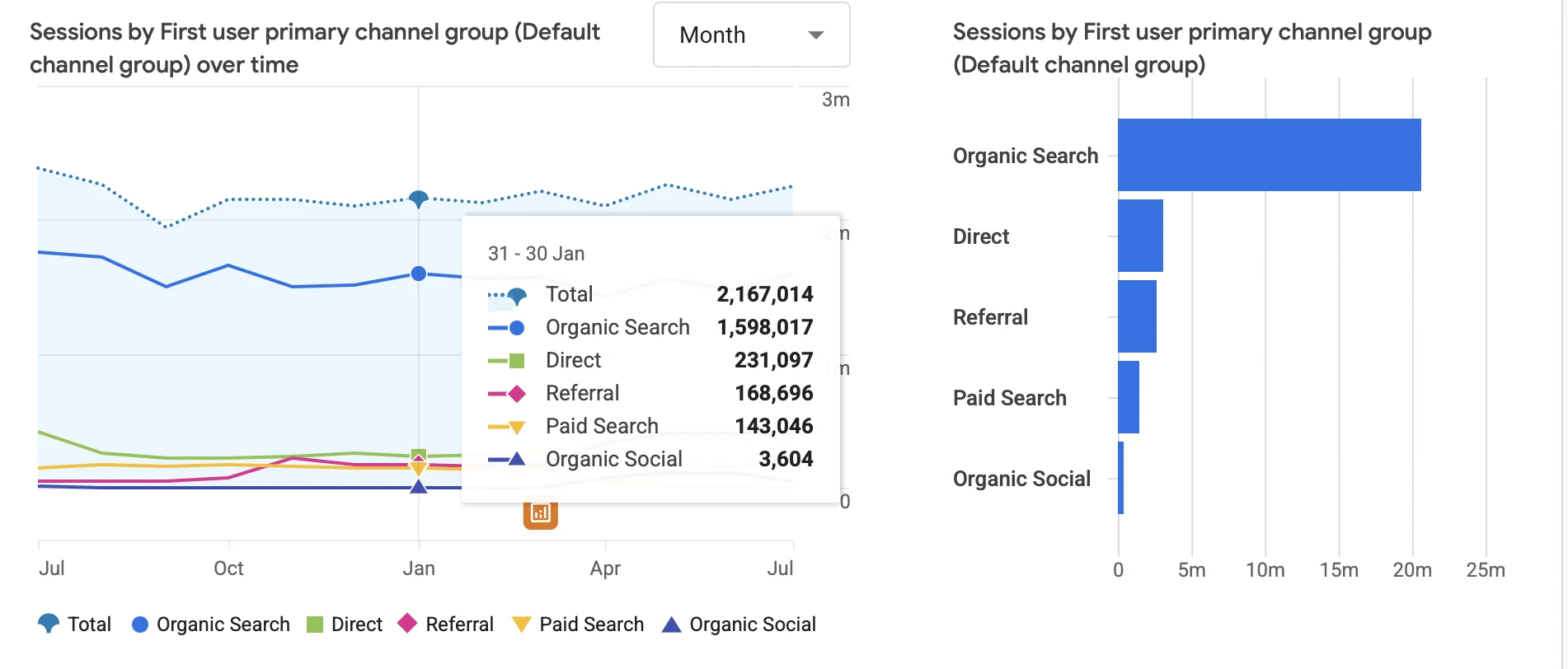
One city inside the platform
The city-level analytics view documents sustained organic growth. The same architecture can be governed across multiple locations without publishing duplicate city pages.
See the platform approach →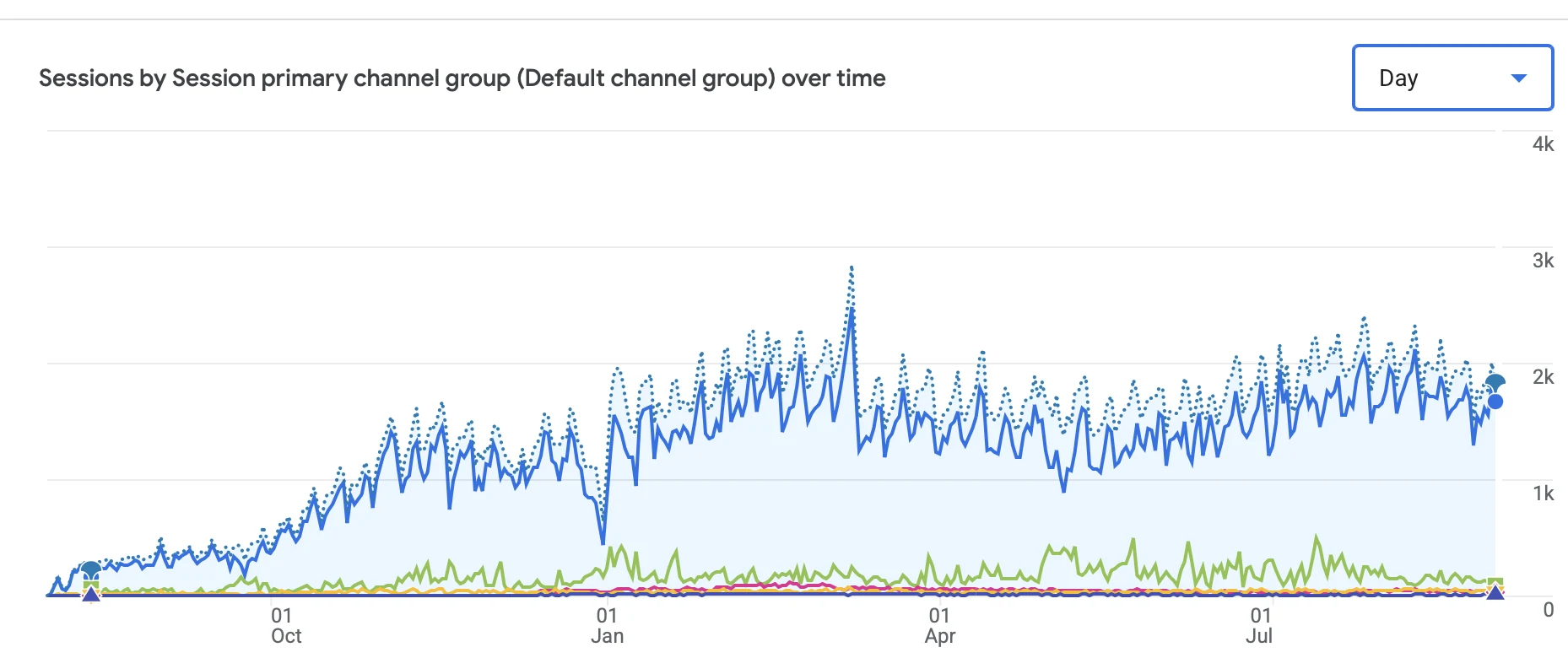
05 / CHOICE
| Decision | Aggregator-dependent setup | Owned restaurant search system |
|---|---|---|
| Discovery | One profile and paid visibility | Maps, location, cuisine, menu, occasion and AI-answer coverage |
| Menu | Third-party listing or download only | Mobile-friendly HTML menu with clear sections and stable URLs |
| Locations | Copied venue pages | Distinct local entities, demand and conversion paths for each venue |
| Reputation | Reviews checked occasionally | Guideline-compliant request, response and issue-escalation workflow |
| Measurement | Traffic and ranking reports | Reservations, calls, directions, enquiries and non-branded discovery |
06 / FIRST 90 DAYS
No overnight-ranking promise. Each month has a clear operating goal and visible outputs.
Demand map, competitor baseline, site and local architecture, technical audit, crawler access, HTML/menu review, analytics and trust checks.
Priority venue, menu, cuisine, location and occasion pages; fixed internal links; structured answer blocks; entity anchors and authority plan.
Index gaps, ranking movement, missed queries, Maps actions, conversions, AI referrals and bot logs determine the next implementation cycle.
07 / DELIVERY
Work is prioritized against opportunity and implementation capacity. Restaurant SEO is reported through diner actions, not a monthly list of completed tasks.
Map my restaurant demandPages, profile work, technical tickets, owners and blockers.
Non-brand search, Maps actions, bookings, calls, locations and AI referrals.
New cuisine, occasion, neighborhood, menu and competitor opportunities.
You work with Dima, not an account-manager relay.
08 / QUESTIONS
Other industry programs: automotive SEO, healthcare SEO and WordPress SEO services.
START HERE
Send the site, locations and target market. I’ll identify the first commercial cluster, the biggest structural leak and whether the opportunity fits a focused engagement.
Cookies, briefly. Essential ones run the site; analytics cookies (Google) only switch on if you say yes. Details in the Privacy Policy.