a zine about getting found — issue 01
filed under: home / services / healthcare

Google + local + AI search for healthcare brands

HealthcareSEO.

Healthcare SEO services for clinics, health systems and health-tech companies that need qualified patient or product demand without shortcuts around trust, review and measurement.

  • Direct with Dima
  • 9+ years in SEO
  • Real non-brand proof

DIRECT ANSWER

What is healthcare SEO?

Healthcare SEO is the work that makes a healthcare provider, medical practice, health system or health-tech company visible when people search for care, information or a relevant product. It connects technical SEO, local SEO, content strategy, trustworthy authorship, structured data, authority and conversion measurement. The goal is not traffic by itself. It is a qualified appointment action, call, form, sign-up or other agreed business outcome from organic search.

Search engine optimization is more constrained in the healthcare industry because inaccurate healthcare information can affect real decisions. An effective healthcare SEO strategy therefore needs clear clinical and organizational ownership. Marketing can map patient searches, improve a medical website and structure content, but qualified client-side reviewers remain responsible for medical claims and required approvals.

This page combines a commercial service structure with the explanations searchers expect from a healthcare SEO guide. It shows who the program fits, what ships, how local and technical work connect, how ROI is measured and what a documented health-tech result proves.

01 / FIT

One healthcare market. Four different search systems.

Choose the closest organization model. Patient intent, page architecture, review ownership and the conversion event change with it.

Search outcome

Connect local patient searches to the right service and appointment path.

For private practices, specialty clinics and medical groups. The program joins Google Business Profile, provider and service pages, reviews, location signals and conversion tracking instead of treating local SEO as a listings checklist.

Priority system

  • Service, condition and location demand map
  • Provider, location and review trust signals
  • Calls, forms and appointment-path measurement
More qualified local discovery and appointment actions

02 / SCOPE

What healthcare SEO services actually include.

Every workstream ends in an approved page, implementation ticket, operating process or measurable change. The scope is adapted to a clinic, healthcare organization or digital-health product.

01

Demand + architecture

Keyword research becomes a map of services, conditions, symptoms, providers, locations, questions and product use cases. Each cluster gets one clear destination and business action.

02

Technical SEO

Indexation, rendering, canonicals, internal links, page speed, accessibility, structured data and crawler access become prioritized implementation tickets.

03

Clinical trust system

Authors, qualified reviewers, review dates, citations, policies and entity details are designed around the organization's real ownership and approval process.

04

Local medical SEO

Locations, practitioners, services, Google Business Profiles, healthcare directories, reviews and contact data are aligned for nearby patient searches.

05

Content + AI search

Useful healthcare content answers the question first, supports claims with appropriate sources and gives search engines and generative AI clear facts to retrieve.

06

ROI + reporting

Google Search Console, GA4, calls, forms, appointments, qualified sign-ups and AI referrals are reported by non-branded cluster, location and service line.

THE TRUST CHAIN

Patient searches need a path to an owned, reviewable answer.

Intentsymptom · service · provider · near me
Reviewed answerauthor · reviewer · source · date
Owned actionappointment · call · qualified sign-up

03 / ON-PAGE SYSTEM

Healthcare search engine optimization, page by page.

Healthcare SEO performance comes from the relationship between demand, accurate information, a technically accessible page and a useful next step.

KEYWORD RESEARCH

Map patient searches to real destinations.

A healthcare SEO strategy starts by separating brand, service, condition, symptom, provider, location and informational intent. A medical practice might need a service page, a provider page and a location page, while a health-tech product may need use-case, evidence and integration pages. One generic blog post should not compete with the commercial page that helps a person act.

The map also identifies where search volume is irrelevant or unsafe for the organization to target. Keyword research is a decision system, not permission to publish every healthcare query.

TECHNICAL FOUNDATION

Make critical content available in HTML.

Technical SEO covers crawl access, indexation, rendering, canonical rules, internal linking, site speed, mobile usability, security, accessibility and structured data. Important service, provider and healthcare content should be present in server-rendered HTML rather than depend on client-side interaction before search engines can read it.

Schema markup must match visible content. MedicalBusiness, Physician, Organization, Service, FAQPage and other types can clarify an entity, but markup cannot repair missing facts or manufacture expertise.

CONTENT + REVIEW

Separate writing, medical review and approval.

Healthcare content should answer the query directly, explain scope and limits, and use appropriate sources for factual claims. The organization decides when a named medical professional must author or review a page. The workflow records the owner, reviewer, publication date, update trigger and final approval instead of adding a decorative byline after publication.

E-E-A-T is not a keyword density trick. Clear people, policies, contact information, evidence and update practices make the healthcare website more useful and easier to evaluate.

LOCAL + REPUTATION

Connect each provider and location to nearby demand.

Local SEO aligns the healthcare website with Google Business Profile, Google Maps, relevant healthcare directories, provider details, services, categories, hours, addresses and phone numbers. Multi-location healthcare businesses need governance so one change does not create inconsistent information across the network.

Positive reviews can influence selection and local visibility, but review requests and responses must follow platform rules and the organization's privacy guidance. No patient detail belongs in a public marketing reply.

Core components of an effective healthcare SEO strategy.

The destination depends on how the person searches. The conversion metric must match that destination instead of reducing every page to a traffic target.

Patient or buyer intentBest destinationWhat to measure
service + location · doctor near meLocation, service and provider pages plus Google profileCalls, directions, appointment actions
condition · symptom · treatment questionReviewed educational page connected to appropriate careQualified next-page path and assisted conversion
hospital or health system service lineService-line hub with locations, providers and access detailsService discovery and completed access action
digital-health problem or use caseUse-case, evidence or product pageDemo, sign-up or qualified product enquiry
AI-generated recommendation or answerConcise answer supported by stable entity facts and sourcesAI referral, mention quality and downstream action

WHY IT MATTERS

Why is SEO important for healthcare providers and medical practices?

Potential patients and product buyers use search engines to compare services, providers, locations and healthcare information before they act. A useful search program creates an owned path from that research to a qualified decision.

DISCOVERY

Reach potential patients without renting every visit.

Search engines like Google can surface a provider in local results, search engine results pages and AI-assisted research. Paid advertising can capture demand quickly, but organic visibility gives a reputable healthcare organization an asset that continues working after a campaign ends. The objective is not an isolated SEO ranking. It is qualified visibility for the services and markets the organization can actually serve.

TRUST

Help people evaluate the source before they act.

Healthcare marketing has to support a high-consideration decision. Clear provider details, accurate healthcare services, useful content, accessible design and visible review ownership help people understand who is responsible for the page. This is important for healthcare organizations seeking long-term organic growth because a successful healthcare site cannot separate discoverability from credibility.

GROWTH

Attract new patients and measure the path.

SEO strategies should connect new patients or product prospects to an observable action. Local healthcare businesses may prioritize appointments, calls and directions. Healthcare companies with a digital product may measure qualified sign-ups or demos. This is how SEO results become a business decision instead of a traffic chart, and how investing in SEO can be compared with other acquisition channels.

STRATEGY SUMMARY

Healthcare SEO strategies for search engines, local search and AI.

The most effective SEO strategies cover technical, on-page, local and off-page work as one medical SEO strategy. Technical improvements make pages crawlable and usable. On-page SEO connects each query to accurate content and a clear action. Local SEO links practices, providers and locations to nearby demand. Off-page SEO develops relevant mentions and backlinks rather than buying authority by volume.

For hospitals and larger health systems, enterprise SEO adds governance across templates, teams and markets. For a medical practice, the priority may be a smaller group of services, providers and locations. For a health-tech business, SEO for healthcare often starts with non-branded problem and use-case demand. There is no single package that fits every regulated healthcare organization.

In 2026, generative AI adds another discovery surface, but it does not remove the need for Google Search, a technically sound website or reliable healthcare information. Good SEO builds long-term organic visibility by making the same verified facts available to people, classic search engines and AI retrieval systems.

Local SEO and healthcare marketing by provider type.

A clinic needs location accuracy, relevant reviews and a short route to an appointment. A multi-market provider also needs governance across profiles and pages. The method changes, but local search should always connect a real entity to a real service area.

Medical SEO strategy for a health system or practice.

A health system coordinates service lines, locations, healthcare professionals and platform teams. A smaller practice can move faster, but still needs clear review ownership. Strategies for healthcare should match the organization's actual resources instead of importing an enterprise checklist.

How SEO builds visibility and how to read SEO results.

Leading indicators include index coverage, qualified impressions, non-branded queries and local visibility. The outcome layer includes approved calls, appointment actions, forms or sign-ups. This distinction prevents a healthcare site's traffic increase from being reported as commercial success without conversion evidence.

SEO for healthcare services across the healthcare industry.

A dedicated healthcare program adapts to the offer, decision and review chain. The same search techniques should not be applied blindly to a hospital, specialist clinic and software product. Healthcare success starts with a scope the organization can support, approve and measure.

04 / PROOF

Non-branded growth in a mental-health YMYL market.

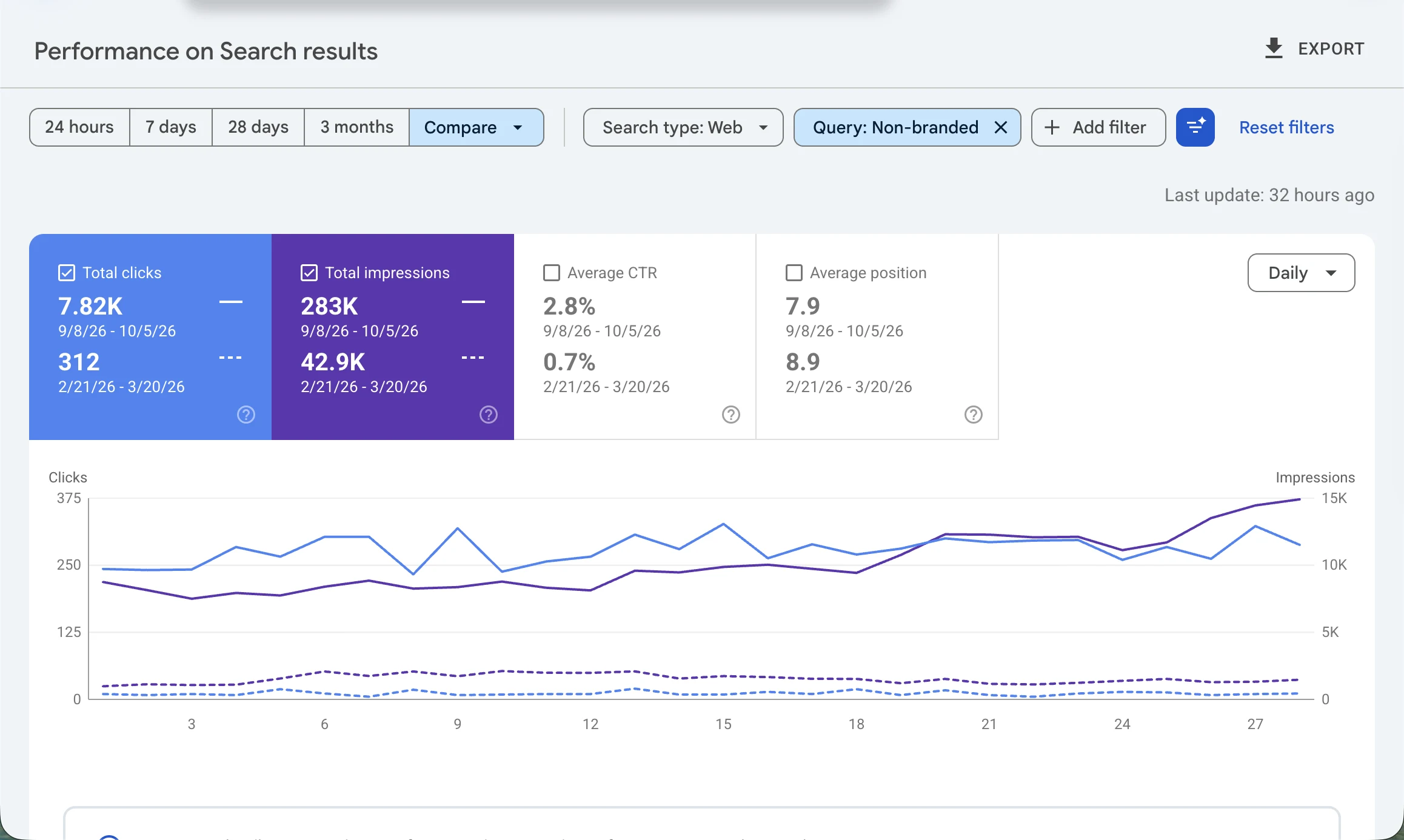
An early-stage AI startup targeting the US, UK, Canada and Australia needed a six-month SEO and GEO strategy. I consulted through February and March, built the roadmap, and handed it off for implementation in late April.

AI startup · mental health

9x daily non-branded clicks.

The work covered keyword and content-gap analysis, technical fixes, link acquisition and AI-citation optimization. Growth appeared after implementation, not on day one: the flat early period was the runway planned at the start.

~3 to ~27
daily clicks
~225 to ~980
daily impressions
6 months
GSC window
Open the full case →
Google Search Console chart showing non-branded traffic growth for an AI mental-health startup
Google Search Console · custom non-branded query filter · 6 months
What this proves:

A strategy can compound in a difficult healthcare category when implementation continues through the initial flat period. It does not promise the same result for every healthcare provider, site or market.

05 / CHOICE

A healthcare program starts where generic SEO stops.

DecisionGeneric SEO packageHealthcare SEO program
Page strategyBlog calendar and broad keyword listService, condition, provider, location and product-intent architecture
Content ownershipWriter publishes after an SEO checkNamed owner, qualified review when needed, sources and update triggers
Technical workOne crawl and a health scorePrioritized tickets across templates, rendering, access, schema and analytics
Local searchOne listings checklistProvider and location entities, profiles, reviews, directories and action tracking
MeasurementTraffic and rankingsNon-brand demand, calls, appointments, qualified forms, sign-ups and AI referrals

06 / FIRST 90 DAYS

Foundation, implementation, reinforcement.

No guaranteed rankings and no generic monthly checklist. Each phase has owners, outputs and a commercial reason.

Month 1

Foundation and risk map

Build the semantic architecture, competitor and AI-visibility baseline, technical audit, crawler and HTML checks, analytics plan, commercial-factor review and trust inventory.

  • Prioritized demand and page map
  • Developer-ready technical backlog
  • Author, reviewer and measurement requirements
Month 2

Ship the search system

Publish or rebuild priority service, location, provider and educational pages; install deliberate internal links, answer blocks, structured data and the agreed review workflow.

  • Commercial pages and content briefs
  • Internal-linking and schema plan
  • Authority and outreach production
Month 3

Measure and reinforce

Review index gaps, non-branded queries, local actions, conversions, AI referrals and crawler logs. Strengthen pages that are close to demand and reset the next implementation cycle.

  • Patient or product-demand report
  • Query, index and conversion backlog
  • Next 90-day growth plan

07 / DELIVERY

You see what shipped, what was approved and what produced demand.

SEO efforts are prioritized against opportunity, patient or product value, review capacity and development capacity. The report keeps recommendations separate from completed implementation.

Map my healthcare demand
WeeklyImplementation board

Pages, technical tickets, review owners, approvals and blockers.

MonthlyHealthcare performance view

Non-brand search, local actions, conversions, index coverage and AI referrals.

QuarterlyDemand reset

New service, condition, location, product and competitor opportunities.

AlwaysDirect specialist access

You work with Dima, not an account-manager relay.

08 / QUESTIONS

Before you choose a healthcare SEO specialist.

What is healthcare SEO?
Healthcare SEO is the process of making a clinic, health system, medical practice or health-tech product easier to find and evaluate in organic search. It combines keyword research, technical SEO, local search, useful healthcare content, internal links, structured data, authority and conversion measurement. The work is different from generic SEO because health information can influence important decisions, so claims, authorship, review ownership and source quality need stricter controls.
How is healthcare SEO different from medical SEO?
Healthcare SEO is the broader term and can include hospitals, health systems, clinics, insurers, medical devices, digital-health products and other healthcare organizations. Medical SEO often refers more narrowly to doctors, medical practices and patient-facing services. The core search engine optimization work overlaps, but the page architecture, review process, local presence, conversion event and regulatory owner change with the business model.
How long does healthcare SEO take?
Technical fixes, tracking corrections and local profile improvements can be implemented in the first month. Specific long-tail or local search results may move within two to three months, while competitive service, condition and national healthcare queries often need longer. Timing depends on the existing website, authority, market, clinical review speed and implementation capacity. I set milestones around shipped work and leading indicators instead of promising a guaranteed ranking date.
What role does E-E-A-T play in healthcare search?
E-E-A-T is a quality framework covering experience, expertise, authoritativeness and trust. It is not a single score or a standalone direct ranking factor. For healthcare content, the practical work includes clear ownership, named authors or reviewers where appropriate, accurate organization and provider information, source discipline, transparent policies and visible update history. These controls also help patients and AI systems assess who produced the information and why it should be trusted.
Does healthcare SEO make a site HIPAA compliant?
No. SEO work does not certify HIPAA compliance, and a marketer should not replace qualified legal, privacy, security or clinical owners. I can flag search and conversion implementations that need review, such as analytics, forms, call tracking, chat tools and patient information flows. The client's authorized owners decide the applicable requirements and approve the setup before sensitive data is collected or processed.
How does local SEO help healthcare providers attract patients?
Local SEO connects a real provider or location to nearby patient searches. It aligns the medical website, Google Business Profile, provider details, address, hours, categories, services, reviews and relevant healthcare directories. Strong local work also gives each location a useful page and a clear action such as calling, requesting an appointment or getting directions. Map visibility is measured with those actions, not treated as a separate vanity report.
How do you measure healthcare SEO ROI?
Healthcare organizations should connect non-branded organic discovery to the actions they are allowed and able to measure: calls, appointment requests, completed bookings, qualified forms, product sign-ups or another agreed conversion. Google Search Console explains queries and landing pages; GA4 and approved call or CRM systems show downstream actions. Reporting separates brand from non-brand traffic, locations and service lines so an increase in visits is not presented as revenue without evidence.
Can healthcare SEO improve visibility in AI answers?
A well-structured healthcare website can become easier for AI systems to retrieve and cite, but no consultant can guarantee a citation. The practical GEO and AEO layer uses direct answer blocks, stable entity facts, clear authorship, structured data that matches visible content, appropriate sources and independent authority signals. I monitor AI referrals and answer visibility alongside Google Search and local results, then use those observations to improve the same underlying content system.

START HERE

Get the healthcare search opportunity map.

Send the website, organization model and target market. I will identify the first commercial cluster, the biggest structural or trust gap and whether the opportunity fits a focused engagement.

  • No generic sales deck
  • No manager in between
  • Reply from Dima
iNevidimka — Dima MochalovPrivacy · Terms · Editorial · Methodology · © 2026
Operated by Mochalov Dmitri Andrei IE (Individual Entrepreneur (Armenia)) · Reg. 20268705 · Arghishti str. 7, suite 0015, Yerevan, Kentron, Armenia. All engagements are governed by our Terms of Service.