The site has demand and a team that can act.
You have a viable offer, access to WordPress and analytics, and someone who can approve theme, plugin, content or development changes. The objective is sustainable non-brand growth.
TEMPLATES + PLUGINS + CONTENT + SEARCH DEMAND
Platform-specific search optimization for WordPress websites that need technical fixes, stronger landing pages and an implementation plan that reaches production.
DIRECT ANSWER
WordPress SEO services improve how a WordPress website is crawled, indexed, understood, ranked and measured. The work connects keyword research, information architecture, site health, templates, plugins, page optimization, structured data, content, internal links, backlinks and analytics. SEO for WordPress is not a one-time plugin installation or a monthly metadata checklist.
WordPress is a content management system with high implementation leverage. One title template, schema component, archive rule or performance decision can affect thousands of URLs. The same leverage works in reverse: one bad template can repeat a ranking problem across the entire site. A platform specialist has to diagnose the recurring system, define the affected page set and verify the rendered output after release.
I work as an independent WordPress SEO consultant, not a full-service digital marketing agency. That model fits teams that want direct senior strategy and already have, or can provide, development and content capacity. When broader production is needed, the scope names the required specialists instead of hiding them behind an account manager.
The objective is not to make a plugin score green. It is to create landing pages that match search intent, remove technical constraints, build authority and connect organic visibility to qualified leads, sales or another agreed business goal.
You have a viable offer, access to WordPress and analytics, and someone who can approve theme, plugin, content or development changes. The objective is sustainable non-brand growth.
Traffic is flat, several pages compete, the site has changed hands or a redesign is planned. A scoped SEO audit identifies the first constraint before ongoing optimization begins.
SEO will stall when there is no access to the theme, no content owner and no release process. Establishing basic measurement and implementation capacity is the first step.
01 / DIAGNOSIS
The platform is rarely the only problem. Themes, plugins, publishing habits and old migrations combine into recurring patterns that affect ranking and user experience.
A theme or page builder repeats weak headings, thin sections, duplicate schema or unnecessary scripts across every page. One small template decision can limit an entire WordPress website.
Several plugins try to control titles, canonicals, redirects, schema, caching or images. Conflicting output creates crawl and performance problems that another plugin will not solve.
Categories, tags, authors, dates, attachments, search pages and pagination create low-value URLs. They consume crawl attention and compete with the pages that should rank.
Posts target similar queries, important services have no supporting cluster and internal links follow publishing chronology rather than a deliberate search architecture.
Themes, fonts, scripts, sliders, embeds and old plugin assets accumulate. Core Web Vitals decline slowly, so the site feels normal to the team while mobile users absorb the cost.
A diagnostic lists errors but does not identify the responsible template, plugin, developer or acceptance test. The PDF is delivered; the WordPress site stays unchanged.
02 / PLATFORM REALITY
WordPress and its SEO plugins expose useful controls. They do not decide which page should own a query, whether a category deserves indexation, which evidence will satisfy a buyer or where backlinks should point.
A disciplined setup separates platform defaults, plugin output and specialist decisions. This prevents duplicate ownership and keeps the SEO plan maintainable when the theme, team or brand changes. WordPress is flexible for search only when those responsibilities stay clear.
WordPress SEO documentation ↗Architecture, indexation, content quality and business intent.
Heading structure, copy placement, links, speed and reusable schema.
Variables, archive rules, module ownership and output validation.
Which changes matter, who ships them and how growth is measured.
03 / WORDPRESS SEO SCOPE
The scope covers the technical, content and authority systems that help a WordPress site earn search rankings and convert the resulting traffic.
Crawlability, indexation, templates, plugins, themes, Core Web Vitals, structured data, content, backlinks and analytics become one prioritized implementation backlog.
Search demand is clustered by intent and mapped to services, products, categories, landing pages and supporting content. Each useful query set receives one primary destination.
Permalinks, canonicals, redirects, sitemaps, robots directives, pagination, archives, JavaScript rendering, status codes and crawl paths are reviewed in rendered HTML.
Titles, descriptions, H1-H3 structure, copy modules, breadcrumbs, related content and internal links are improved at template level, then checked on representative URLs.
Yoast, Rank Math or another SEO plugin is configured deliberately. Duplicate schema, stale modules and overlapping optimization features are removed or assigned clear ownership.
Service pages, landing pages, topic clusters and briefs are planned around search intent, entities, first-hand evidence and the commercial path, not a fixed monthly post quota.
Theme assets, plugins, images, fonts, caching, LCP, INP and CLS are diagnosed against field data and business value instead of chasing a perfect lab score.
Internal authority is directed to priority pages and external links are earned through useful assets, outreach, digital PR and sources that can send real referral traffic.
Google Search Console, GA4 and release notes connect rankings, non-brand clicks, conversions and affected page groups to the SEO work that reached production.
04 / SITE MODEL
The plan changes with the website's page types, revenue model and production team. The broader search engine optimization services layer includes research, content, authority and measurement; comprehensive SEO does not mean enabling every available plugin feature.
Service pages, location evidence, internal links and conversion paths support local or national demand. The SEO of your website must connect each query cluster to a real offer, not a thin page created for every modifier or a copied set of digital marketing strategies.
A WordPress SEO program for a publisher controls categories, authors, updates, templates and internal authority at scale. Editorial workflows matter as much as individual page-level tactics.
WooCommerce SEO adds category architecture, product data, filters, variants and revenue measurement. WordPress and WooCommerce share a platform, but the store requires ecommerce-specific organic search services.
Bespoke themes and headless builds need expertise in WordPress development and rendered-output QA. WordPress SEO and development stay separate disciplines, but every technical ticket needs both perspectives.
05 / TEMPLATE LEVERAGE
A strong optimization service treats templates as product systems. The job is to improve recurring output without flattening every page into the same generic structure.
Crawl data, Search Console, rendered HTML and representative URLs reveal whether the issue belongs to a template, archive, plugin or individual page.
The ticket names the theme file, component, setting, plugin or content rule and defines what correct output should look like.
Staging and production checks confirm HTML, schema, links, performance and index signals across each affected template type.
Commercial pages need a clear offer, intent match, decision-support content, proof and conversion path. On-page SEO is distributed through useful sections, tables, scope, process and FAQ rather than placed in a generic text block at the bottom.
Content creation starts with a defined information need and internal-link role. Pillar pages connect related questions, while supporting articles answer narrower tasks without repeating the same intent. Existing posts are consolidated when several URLs compete.
Archives are indexable only when they provide a useful destination with unique purpose, maintained listings and enough context. A category can be a strong hub. An accidental tag page with one post is usually crawl noise.
Title variables, descriptions, breadcrumbs and structured data should use reliable templates with page-specific inputs. The system must avoid duplicate graphs and match visible content. Manual exceptions are reserved for pages where commercial value justifies them.
06 / TECHNICAL SEO
Settings screens are not evidence. A WordPress SEO service should inspect the response, rendered DOM, index directives, canonical graph, internal links and structured data that search engines actually receive.
The review covers crawlability, indexation, redirects, status codes, sitemaps, robots directives, pagination, JavaScript, mobile behavior and Core Web Vitals. Each finding is tied to a URL pattern and implementation owner so the backlog can reach production.
See technical audit services →07 / CONTENT + AUTHORITY
Search engine optimization is not complete when a blog post receives impressions. The content should move a reader and authority toward the next useful page.
Keyword research maps commercial, informational and local SEO demand to a deliberate site architecture. A service page owns the buying task. A guide answers the supporting question. Internal links connect the two so search engines and users can understand the relationship without relying on the main menu.
Content briefs use entities, source requirements, direct answers and first-hand evidence. This creates useful pages for readers and more reliable passages for AI search systems. Generic text written only to repeat a keyword can raise word count while reducing trust.
Link building supports the pages expected to create business value. Donor selection considers topical fit, real traffic, placement and the chance of a click, not only a domain metric. Earned authority should reinforce the same topic clusters and landing pages defined in the architecture. Successful SEO campaigns combine this external authority with useful pages and clean technical foundations.
08 / FIRST 90 DAYS
The first quarter controls the system, ships the highest-leverage work and measures the affected pages. The WordPress SEO team reviews rankings, conversions and completed releases together, so SEO performance is tied to real changes rather than activity counts.
Build the semantic map, audit crawl and index foundations, themes, plugins, templates, competitors, analytics and AI-crawler access. The first month identifies recurring causes, not a random list of page-level symptoms.
Implement or ticket the highest-leverage template, on-page, structured-data, internal-link and content work. Every recommendation has an owner, acceptance criteria and a representative URL set for QA.
Review recrawl, indexation, ranking movement, non-brand traffic, conversions, backlinks and AI referrals. Missed queries and release evidence set the next 90-day cycle.
09 / DELIVERY MODEL
Ongoing consulting works when strategy, development, content and reporting share one backlog. A recommendation is complete only after the output is visible and validated on production. This creates accountable implementation instead of disconnected marketing services.
Priority intent has one approved landing page, hub or supporting article.
Ticket names the root cause, URL set, change and acceptance criteria.
Page resolves the task, uses evidence and connects to the commercial path.
Rendered HTML, schema, links, index signals and tracking match the ticket.
Non-brand visibility, conversions and completed work share one baseline.
10 / WORDPRESS ECOMMERCE CASE
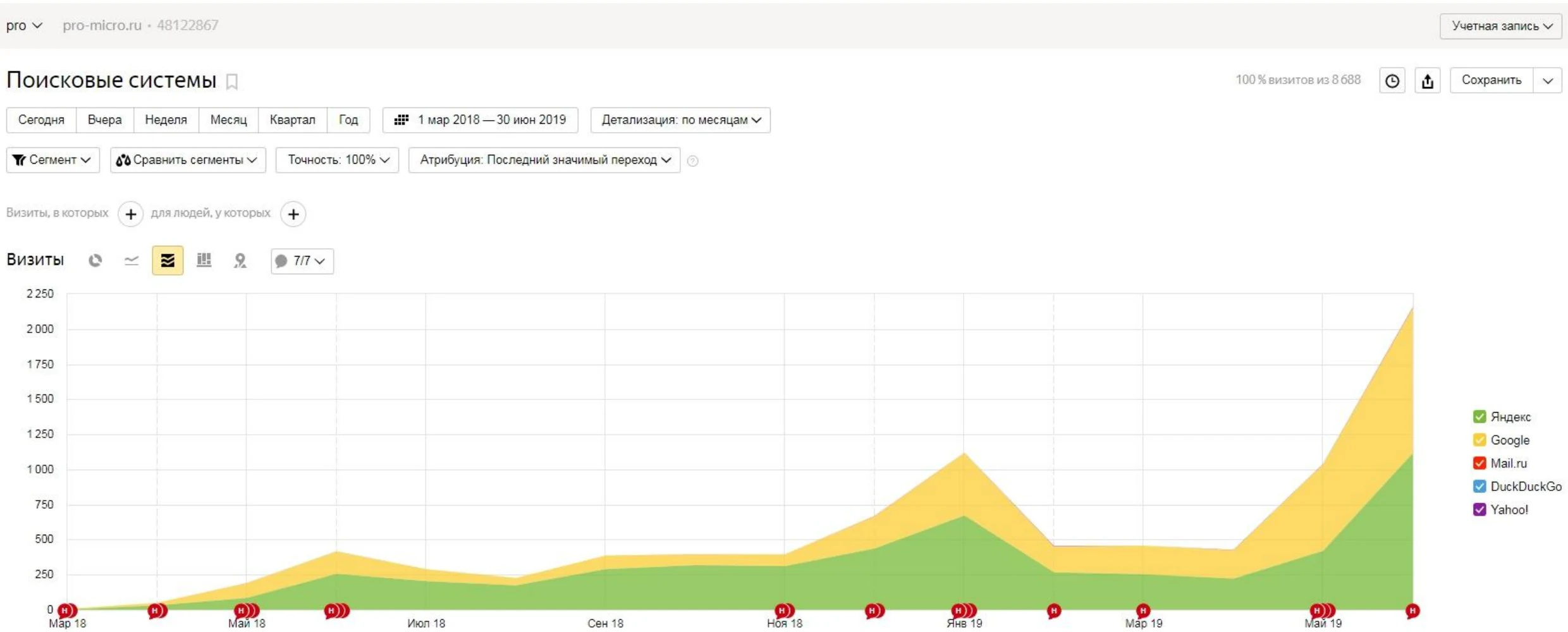
Pro Micro was rebuilt from a single landing page into a WordPress ecommerce store. In the Yandex Metrica search-engine segment, monthly visits moved from near zero in March 2018 to approximately 2,100 in June 2019. The report records 6,688 search visits across the selected period.
11 / PROVIDER FIT
The right provider is the one whose delivery model matches your site, team and implementation capacity. Compare the work, not the label.
Buyers looking for WordPress SEO may compare professional WordPress SEO services, expert WordPress SEO services, a trusted WordPress SEO company or a premier agency. Those labels are not evidence. A leading WordPress SEO agency should still show the first-month plan, implementation model and relevant work before appearing on any top WordPress SEO shortlist.
Some businesses need a team of WordPress SEO experts with design, content and development capacity. Others need a WordPress SEO specialist while an existing team of WordPress experts handles production. The best SEO arrangement closes the actual capability gap without duplicating WordPress SEO professionals, repeating old SEO tactics or wasting SEO efforts.
Fits when you already have developers, writers or marketers and need diagnosis, priorities, implementation tickets and QA from the person directing organic search.
Fits when a company needs theme development, content creation, outreach, design and project management under one contract. Confirm which SEO specialists remain involved after the sale.
Fits when the strategy already exists and the need is theme or plugin implementation. Verify separate depth in keyword research, content, links and search measurement.
I am an independent SEO & AEO specialist with WordPress implementation experience, not a large web design agency. I can own research, strategy, tickets and release validation, then work with your developer and content team. When a team of SEO experts or additional WordPress developers is required, those production needs are scoped openly.
Audit, demand map, prioritized backlog, baseline and named owners.
A fixed post or backlink package before the site is reviewed.SEO, developer and client responsibilities are written into the scope.
A report is delivered without implementation access or QA.Non-brand queries, affected pages, conversions and completed releases.
Only total rankings, traffic or a plugin health score.The provider explains dependencies, uncertainty and realistic timing.
Guaranteed rankings, traffic or sales.12 / PRICING
Pricing follows the systems that need work: templates, plugins, page types, markets, competition, content and implementation complexity. A large site with clean recurring templates can be simpler than a small site carrying years of technical debt. Affordable WordPress SEO means a focused scope with clear priorities, not a cheap list of automated WordPress SEO packages.
VISIBLE SOURCES
WordPress, plugins and search requirements change. Platform and performance claims are linked to current official sources rather than copied from an old checklist or repeated as generic technical problems.
13 / FAQ
Direct answers about scope, timing, cost, plugins, technical problems, WooCommerce, migrations and choosing a provider.
WordPress SEO services include keyword research, information architecture, crawl and index control, template and on-page optimization, plugin configuration, structured data, content planning, internal linking, Core Web Vitals, backlinks and analytics. The exact scope depends on the site. A useful engagement identifies which theme, plugin, template or content decision causes each issue, assigns an owner and checks the release. It is broader than installing an SEO plugin or editing metadata on individual posts.
Cost depends on site size, template count, plugin and theme complexity, competition, technical debt, content needs and who will implement the changes. A focused audit for a small service site is a different project from ongoing SEO for a large publisher, marketplace or WooCommerce catalog. I review the website before quoting, then define deliverables, ownership and timing instead of selling a generic package based only on the number of keywords.
Technical and template fixes can produce leading indicators within weeks after Google recrawls the affected URLs, while competitive non-brand rankings and meaningful conversion growth usually take several months. Timing depends on authority, site history, implementation speed, content quality and the strength of the search results. I separate fast control work from slower content and authority growth, baseline each page group and report what shipped before attributing movement to the SEO campaign.
No. SEO plugins expose controls for titles, canonicals, sitemaps, robots directives and structured data, but they cannot choose the right architecture, resolve search intent, improve weak evidence or earn authority. They also cannot decide whether an archive deserves indexation or whether a page-builder module hurts performance. Rank Math, Yoast SEO and similar plugins are implementation tools. The SEO strategy still requires research, judgment, development coordination, content work and measurement.
Yes. WordPress is a capable platform for SEO because it provides controllable templates, clean publishing workflows, extensibility and access to technical output. Problems usually come from accumulation rather than the CMS itself: heavy themes, overlapping plugins, duplicate archives, inconsistent content and unmanaged migrations. WordPress can support small service sites, large publishers and ecommerce stores, but its flexibility creates a governance requirement. The site performs well when each recurring system has a clear owner.
Both Yoast SEO and Rank Math can provide the essential controls needed for a WordPress site. Configuration matters more than the badge. A clean setup should establish title variables, canonical behavior, sitemap inclusion, archive rules and one consistent schema graph without enabling every available module. I have used both, and I published a practical guide to Rank Math dynamic title variables. The right choice is the one your team can maintain without plugin overlap or silent output changes.
Common WordPress SEO issues include duplicate category and tag archives, incorrect canonicals, redirect chains, attachment URLs, thin author pages, weak permalink migrations, conflicting schema, missing internal links, bloated page-builder output and slow templates. Other recurring problems are titles edited one page at a time, important content hidden behind client-side JavaScript and plugin features that overlap. A technical site audit should group these by root cause and affected URL pattern instead of reporting each instance as a separate task.
Yes, when the cause is within the theme, plugins, assets, media or delivery configuration that the team can change. The process starts with field and lab evidence, then identifies the element responsible for LCP, INP or CLS. Typical work includes image sizing, font loading, script reduction, plugin cleanup, caching and template changes. Speed work is prioritized against business value: removing a useful conversion feature for a higher score is not automatically a good SEO decision.
Yes, but ecommerce search adds catalog-specific work. Product categories, products, attributes, filters, variants, availability, reviews, Product schema and transactional performance need their own rules. A standard WordPress service-site plan is not enough for a store with many SKUs or faceted navigation. I apply the same technical and template discipline, then add ecommerce demand mapping, category architecture, product data, internal authority flow and revenue measurement around the WooCommerce catalog.
Yes. This is usually the strongest delivery model. I diagnose search problems, define priorities, write implementation tickets and validate the rendered result; the existing WordPress developer controls the theme, staging process and deployment. Each ticket states the affected template or plugin, evidence, expected behavior and acceptance test. That prevents SEO from becoming a vague request to add more text and prevents development work from being judged only by whether the page still looks correct.
Yes. WordPress SEO migration support can cover URL inventory, redirect mapping, content and metadata preservation, internal links, canonicals, robots directives, sitemaps, schema, analytics, staging checks, launch QA and post-launch monitoring. The work should begin before the new theme or URL structure is final. Waiting until launch to review search dependencies turns preventable issues into a recovery project and makes it difficult to separate migration losses from normal ranking volatility.
Compare the first 30 days, implementation ownership and reporting model. A WordPress SEO agency may be appropriate when you need developers, writers, outreach and project management under one contract. An independent consultant fits when those capabilities already exist and the team needs direct senior strategy and QA. Ask who performs the audit, who changes the site, how releases are validated and whether reporting separates non-brand visibility, conversions and completed work from generic ranking counts.
START HERE
Send the site, target market and the organic-search problem you need to solve. I will identify the first commercial opportunity, the likely system constraint and whether an audit, consulting or managed scope fits.
Cookies, briefly. Essential ones run the site; analytics cookies (Google) only switch on if you say yes. Details in the Privacy Policy.